

Yes. Some medical courier opportunities allow you to use your own car. Acceptance depends on the company’s vehicle requirements, the shipment, the route, and insurance for paid delivery work. Your car must also accommodate the required containers and handling procedures.
Published company policies show that personal vehicles can be an option. Dropoff lists cars, SUVs, and vans among its courier vehicles. OnWay says most of its medical courier routes use a sedan or SUV.
The useful next question is: Can my car meet the requirements of the specific route I want? Start with that check before buying another vehicle or paying for equipment you may not need.
What Makes a Personal Car Suitable for Medical Courier Work?
Consider five parts of the assignment together: company approval, usable cargo space, handling requirements, insurance, and daily reliability. A car that works for one route may not suit another.
1. The Company Accepts Your Vehicle
Ask about the vehicle types, model years, condition, inspections, and documents the company accepts.
For example, Dropoff’s published requirements include a registered, insured, inspected car, SUV, or van less than ten years old. That is a company requirement, not a nationwide rule for all medical couriers.
Provide the actual vehicle details when applying. Confirm what happens if you later need to use a different car.
2. The Full Load Fits Safely
Check the dimensions of the transport cases, the door or trunk opening, and the approved placement inside the car. Ask how containers must be positioned and secured. Do not leave packages loose where they can slide, tip, or become damaged during normal driving.
The key measurement is the largest load you will carry at one time. Several pickups before one delivery can require much more room than a single pickup.
3. The Shipment’s Handling Instructions Can Be Followed
Ask what you will transport, who prepares the packages, and what conditions must be maintained. A box of supplies and a temperature-sensitive specimen shipment may need different arrangements.
Our guide to medical cargo you may transport after CMCP training explains why the cargo and assigned duties matter when planning courier work.
4. Insurance Covers the Intended Delivery Activity
Confirm coverage for the actual use of the car. A policy that covers commuting or personal errands may treat paid deliveries differently. Resolve that question before starting the route.
5. The Car Can Support Dependable Daily Work
Check the tires, brakes, lights, locks, and scheduled maintenance. Plan for fuel or charging, pickup access, parking, and the route’s time commitments.
Ask how to report a breakdown and who can authorize a replacement vehicle or transfer of the shipment.
Do You Need a Commercial Auto Insurance Policy?
The appropriate coverage depends on the insurer, policy, work arrangement, and client requirements. Ask your insurer whether you need a delivery endorsement, commercial auto policy, or another arrangement for paid medical deliveries.
The Texas Department of Insurance explains that some personal policies cover certain delivery activity while others exclude business driving. Company coverage can also leave gaps, including travel to a pickup or the return journey.
Ask the insurer and courier company:
- Is paid medical delivery covered under this policy?
- Which parts of the trip are covered?
- Who covers damage to my own car, and what deductible applies?
- Is damage to the shipment covered, or is separate coverage needed?
Explain the cargo and how often you expect to drive. Request written policy details so you can check the answer against the assignment’s insurance requirements.
Do Medical Deliveries Require a Refrigerated Vehicle?
The shipment’s instructions determine the required transport setup. Ask whether the assignment uses an approved insulated system in a suitable vehicle or requires active refrigeration.
For laboratory specimens, Quest Diagnostics provides test-specific storage and transport temperatures, stability limits, and special handling instructions. Those requirements can differ between specimens.
That distinction matters in a personal car: a comfortable cabin does not establish that the shipment remained within its required temperature range.
Before accepting temperature-sensitive work, confirm:
- Who supplies and prepares the transport container.
- The required temperature range and maximum transport time.
- Which monitoring device or record is required, if applicable.
- Where the container should be placed and secured.
- Who to contact if a reading or delay falls outside the instructions.
Do not add ice, change coolant, open packaging, or move a shipment into another container without the required authorization and training.
Our Medical Courier Specimen Handling Training covers handling, temperature control, transport systems, and delivery procedures.
A Separate Check for Shipments Containing Dry Ice
Dry ice releases carbon dioxide gas. Inadequate ventilation during transport can create dangerous conditions, as documented by the CDC.
Before accepting a dry ice assignment, confirm that the vehicle, cargo location, training, and operating procedure are suitable. See our Dry Ice Transportation Training for Medical Couriers for the related course.
Can You Use the Car for Passengers or Other Deliveries at the Same Time?
Ask before combining activities. Passenger access, personal items, other goods, and additional stops may conflict with the shipment’s rules or the client’s procedures.
For example, PHMSA’s interpretation of the exclusive-use condition for the specific Category B patient-sample exception in 49 CFR 173.134(b)(10) explains that the vehicle cannot carry other goods, materials, or passengers during that transport event. This is a condition of that exception, not a rule to apply automatically to every medical delivery.
Confirm whether your route requires exclusive use of the vehicle. Do not assume that permission to use your personal car also permits combining the shipment with rideshare passengers, food deliveries, or personal errands.
What Equipment Should You Have in Your Car?
Request the company’s equipment list before shopping. Confirm what is provided, what you must supply, and who maintains or replaces it.
Depending on the assignment, ask about:
- Transport containers.
- Approved equipment for securing the load.
- Temperature monitoring.
- Protective equipment.
- Cleaning supplies.
- The required phone or delivery application.
Equipment should match the duties you have been assigned and trained to perform.
Keep the cargo area ready for the approved load. Follow the company’s cleaning and access rules, and protect delivery records from unnecessary access. If a package is damaged or leaking, follow the designated response procedure rather than improvising a cleanup.
Our HIPAA Privacy and Security in Medical Courier Operations course addresses vehicle security, delivery records, mobile devices, and incident reporting.
Example: One Car, Two Different Route Decisions
Consider a hypothetical sedan that a courier company has approved for two of its assigned transport cases. The cases fit in their required position and can be secured as instructed. Assume insurance, training, and the other handling requirements have been confirmed.
Route A Fits the Approved Capacity
The driver collects two cases, delivers them to the laboratory, and then collects the next shipment.
The largest load is two cases, so the route fits the approved capacity in this example.
Route B Exceeds the Approved Capacity
The driver must collect two cases at each of three clinics before making the first laboratory delivery.
Two cases + two cases + two cases = six cases before the first delivery.
That route exceeds the car’s approved two-case capacity. The driver needs an approved change to the assignment or a suitable vehicle before accepting it. Stacking containers, using a different location in the car, or changing the route requires approval.
When discussing an opportunity, ask:
“What is the largest number of transport cases I may carry at any point on this route, including busy days?”
Count All the Driving Before Deciding Whether the Route Works
Ask how travel to the first pickup, deliveries, waiting time, returns, tolls, and parking are handled. Compare those terms with the cost of operating your car.
For a simple hypothetical example:
- Eight miles to the pickup.
- Twenty-two miles during deliveries.
- Ten miles back to your starting point.
That totals forty miles of driving. Assess the offer using the full route, not only the twenty-two delivery miles.
Include maintenance, tires, insurance, and vehicle wear in your planning. If the car is leased or financed, check the agreement for relevant use or mileage restrictions.
Vehicle Readiness Checklist for Medical Courier Applicants
Before accepting work with your own car, confirm:
- The company accepts my vehicle type, model year, and condition.
- My license, registration, and any required inspections are current.
- Insurance covers the intended delivery activity.
- The largest expected load fits the approved cargo area.
- I know how each container must be positioned and secured.
- I have the handling and temperature instructions for the shipment.
- I know the rules for passengers, personal items, and other deliveries.
- I have completed the required training and company onboarding.
- I know how to report delays, damage, temperature concerns, or a breakdown.
- I understand the payment terms and the expenses I must cover.
If an answer is missing, resolve it with the company, insurer, or responsible shipping contact before the assignment begins.
What Training Should You Consider Before Using Your Car?
Vehicle ownership does not determine the training needed for an assignment. The cargo, your duties, and the applicable employer and client procedures guide that decision.
Prepare to recognize package problems, protect information, follow handling instructions, document handoffs, and report exceptions. Ask which training the company provides and which records it wants from applicants.
CMCP for Drivers and Courier Professionals
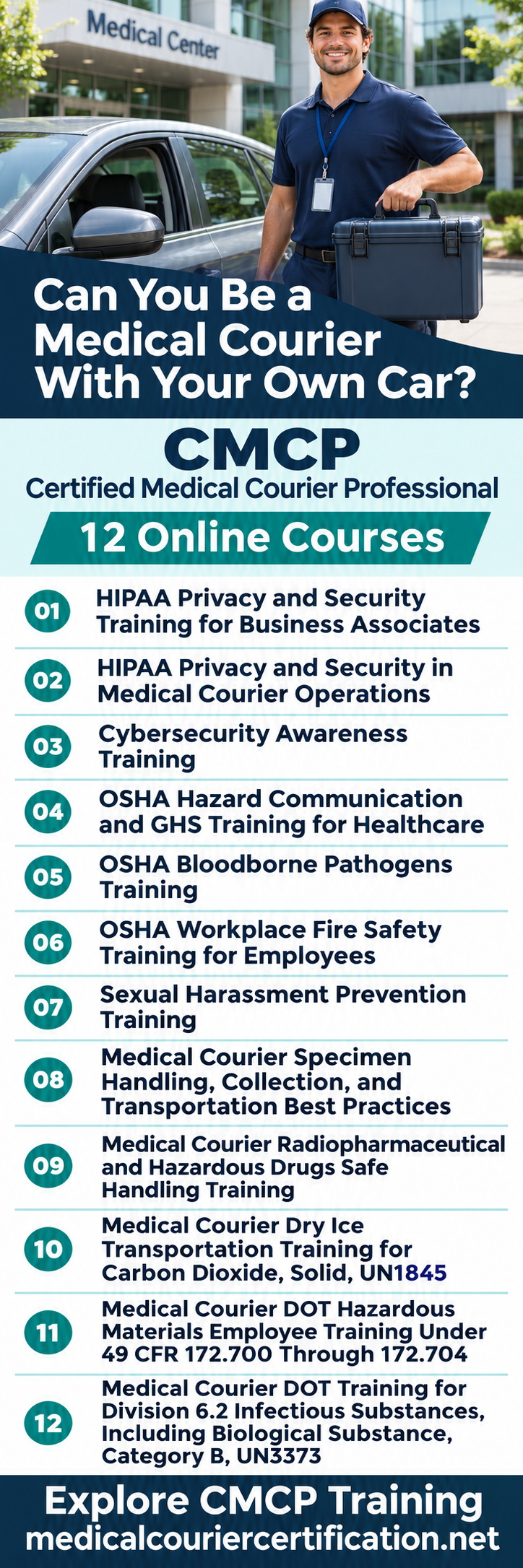
The Certified Medical Courier Professional program includes 12 online courses for $150. Topics include privacy, specimen transportation, workplace safety, and regulated materials.
The credential is earned after completing the required courses and assessments.
CMCE for People Planning a Courier Business
The Certified Medical Courier Expert program includes 14 online courses for $249. It adds highway driver training and the six-hour Medical Courier Business Builder course with 70 downloadable resources to the CMCP foundation.
A training credential documents education. It does not establish that your car meets a client’s vehicle requirements or guarantees work. Confirm the complete requirements for the opportunity you are considering.
Frequently Asked Questions
Do I Need a Van to Become a Medical Courier?
Not for every opportunity. Some companies accept cars or SUVs for particular routes. Choose a vehicle based on the company’s criteria, the largest load, and handling requirements. Confirm an actual opportunity before buying a larger vehicle.
Is There a Maximum Vehicle Age for Medical Courier Work?
Requirements vary by company. For example, Dropoff currently lists a vehicle less than ten years old. Use the current requirements of the company you are applying to, rather than treating one company’s policy as an industry rule.
Can I Use a Leased or Borrowed Car?
Only if the company, vehicle owner or lease agreement, and insurance arrangements permit the intended use. Confirm authorization and coverage for you as the driver before taking deliveries.
Can I Use a Regular Household Cooler?
Do not assume it meets the shipment’s requirements. Obtain the approved container, preparation, placement, and monitoring instructions. Use equipment accepted for the specific cargo and route.
Where Can I Find Opportunities That Accept Personal Cars?
Review official courier-company application pages and current local postings. Confirm vehicle requirements directly before purchasing equipment.
Our guide to finding medical courier jobs and contracts can help you organize the search.
Prepare Your Car for the Work You Want
Ask for the route details and vehicle criteria first. Use the checklist to identify gaps, confirm insurance, and arrange the required equipment and training.
Explore CMCP training to build your courier training record, or review CMCE if your goal includes running a medical courier business.


How Much Does It Cost to Start a Medical Courier Business? - Medical Courier Certification says: