Understand Infection Prevention Across Healthcare Workplaces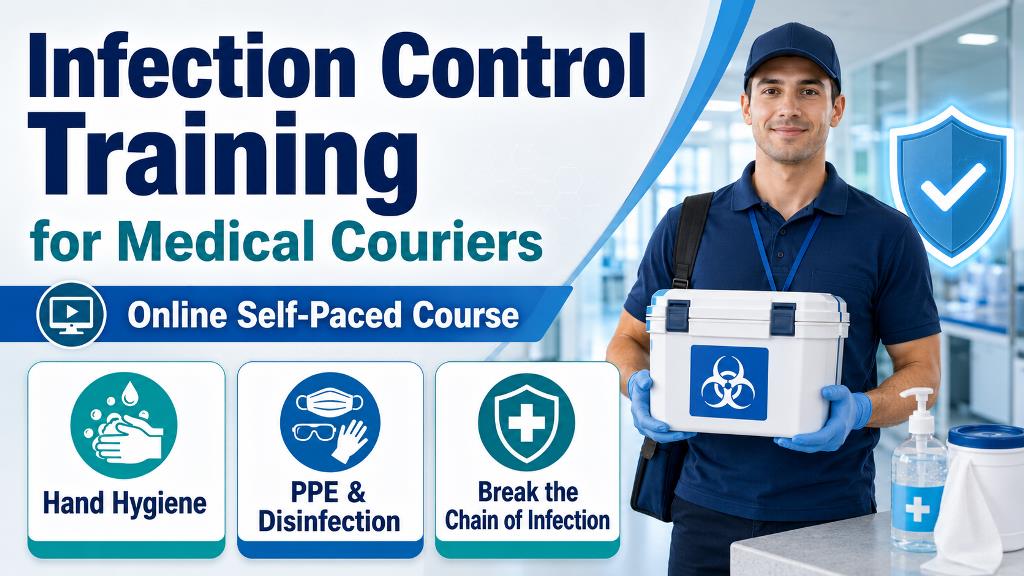
Medical couriers regularly visit hospitals, laboratories, clinics, pharmacies, long-term care facilities, dental practices, and other healthcare locations.
Although couriers may not provide direct patient care, they work around healthcare materials, prepared specimens, medical supplies, transport containers, equipment, and frequently touched surfaces. Understanding basic infection-control practices can help couriers protect themselves and support safer healthcare operations.
This online Infection Control Training provides foundational education about how infections spread and how employees can help break the chain of infection.
The course covers hand hygiene, vaccinations, personal protective equipment, cleaning and disinfection, sharps safety, regulatory standards, air quality, and outbreak response.
What Is Infection Control Training?
Infection control training teaches employees how infections can spread and introduces the practices used to reduce transmission in healthcare workplaces.
Learners receive an overview of:
- Infections and germs
- The chain of infection
- Portals of exit and entry
- Modes of transmission
- Vulnerable hosts
- Hand hygiene
- Vaccinations
- Personal protective equipment
- Cleaning and disinfection
- Sharps safety
- Regulatory standards
- Bloodborne pathogen awareness
- Air-quality considerations
- Outbreak prevention and response
The training helps employees understand how their actions can support infection prevention, even when they do not provide clinical care.
Why Infection Control Matters for Medical Couriers
Medical couriers move between different healthcare environments throughout the workday. They may enter patient-care facilities, laboratories, pharmacies, offices, loading areas, and receiving departments.
Their work may involve contact with:
- Prepared specimen packages
- Medical supplies
- Transport containers
- Healthcare equipment
- Delivery carts
- Shipping and receiving areas
- Frequently touched workplace surfaces
- Materials requiring special handling precautions
Infection-control awareness helps couriers understand the importance of hand hygiene, appropriate PPE, clean work practices, safe sharps practices, and following the procedures established by their employer and healthcare clients.
This training also helps Courier to avoid the cross contamination between two pick up locations.
This course provides a general infection-control foundation. Employers should add instructions addressing the courier’s actual assignments, transported materials, equipment, workplace conditions, and possible exposure risks.
Who Should Take This Course?
This training is appropriate for healthcare employees who need foundational infection-control education.
Medical courier learners may include:
- Medical courier drivers
- Laboratory couriers
- Specimen transportation personnel
- Healthcare delivery employees
- Pharmacy delivery personnel
- Courier dispatchers and route coordinators
- Medical courier supervisors
- Healthcare logistics employees
- Employees entering healthcare facilities
- Employees handling prepared healthcare shipments
The course is also suitable for:
- Doctors, nurses, and clinical staff
- Laboratory technicians
- Long-term care employees
- Dental professionals
- Cleaning and housekeeping employees
- First responders
- Emergency medical services personnel
- Other healthcare support employees
Employers should determine which employees need this course based on their duties and workplace risks.
What You Will Learn
After completing this training, learners should be able to:
- Explain what an infection is
- Describe what germs are and where they may be found
- Identify the main links in the chain of infection
- Recognize common modes of transmission
- Explain the importance of hand hygiene
- Identify common hand-hygiene methods
- Recognize when hand hygiene should be performed
- Explain the purpose of vaccinations
- Describe the purpose of personal protective equipment
- Recognize when PPE may be needed
- Understand the difference between cleaning and disinfection
- Recognize the importance of cleaning high-touch surfaces
- Apply basic sharps-safety principles
- Identify organizations involved in infection-control standards
- Explain how several preventive practices help break the chain of infection
- Recognize the importance of air quality
- Understand basic outbreak-response principles
Benefits of Online Infection Control Training
Broad Healthcare Application
The course provides infection-control education that applies across hospitals, laboratories, dental practices, long-term care facilities, and other healthcare environments.
Relevant to Medical Couriers
Medical couriers are included in the intended audience and can apply the course principles when entering healthcare workplaces and completing assigned delivery responsibilities.
Flexible Online Format
Learners can complete the approximately one-hour course online and at their own pace during the 60-day access period.
Audio-Supported Learning
The course includes 61 slides with audio support.
English and Spanish Options
Learners can register for the English or Spanish version.
Certificate of Completion
A certificate is provided after successful completion and can be maintained as part of the employer’s training records.
Frequently Asked Questions
Strengthen Infection Prevention Across Your Courier Workforce
Medical couriers are part of the healthcare delivery system. Foundational infection-control knowledge can help them work more safely when entering healthcare facilities, handling assigned shipments, and interacting with healthcare employees.
This course provides education about:
- How infections spread
- The chain of infection
- Hand hygiene
- Vaccinations
- Personal protective equipment
- Cleaning and disinfection
- Sharps safety
- Regulatory standards
- Breaking the chain of infection
- Air quality
- Outbreak response
Online and self-paced
Approximately one hour
61 audio-supported slides
60 days of access
English and Spanish options
Certificate of completion
$25 per learner
Important Training Notice
This course provides general infection-control education for healthcare employees, including medical couriers. It does not constitute medical or legal advice.
The course does not replace an employer’s workplace-specific infection-control procedures, exposure determination, Exposure Control Plan, PPE instruction, respiratory-protection program, cleaning procedures, emergency-response requirements, Bloodborne Pathogens Training, or DOT hazardous-material training.
Employers are responsible for evaluating employee duties, workplace hazards, transported materials, client requirements, and applicable federal, state, and local requirements.
Infection Control Training for Medical Couriers is rated 4.9 out of 5 by 98534 users.