Core Highway Transportation Training for Medical Couriers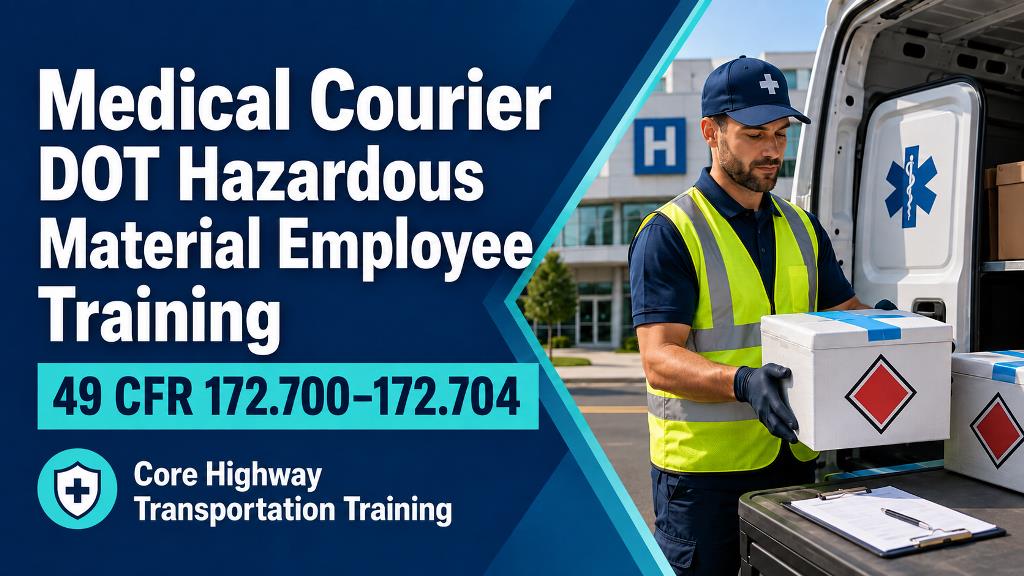
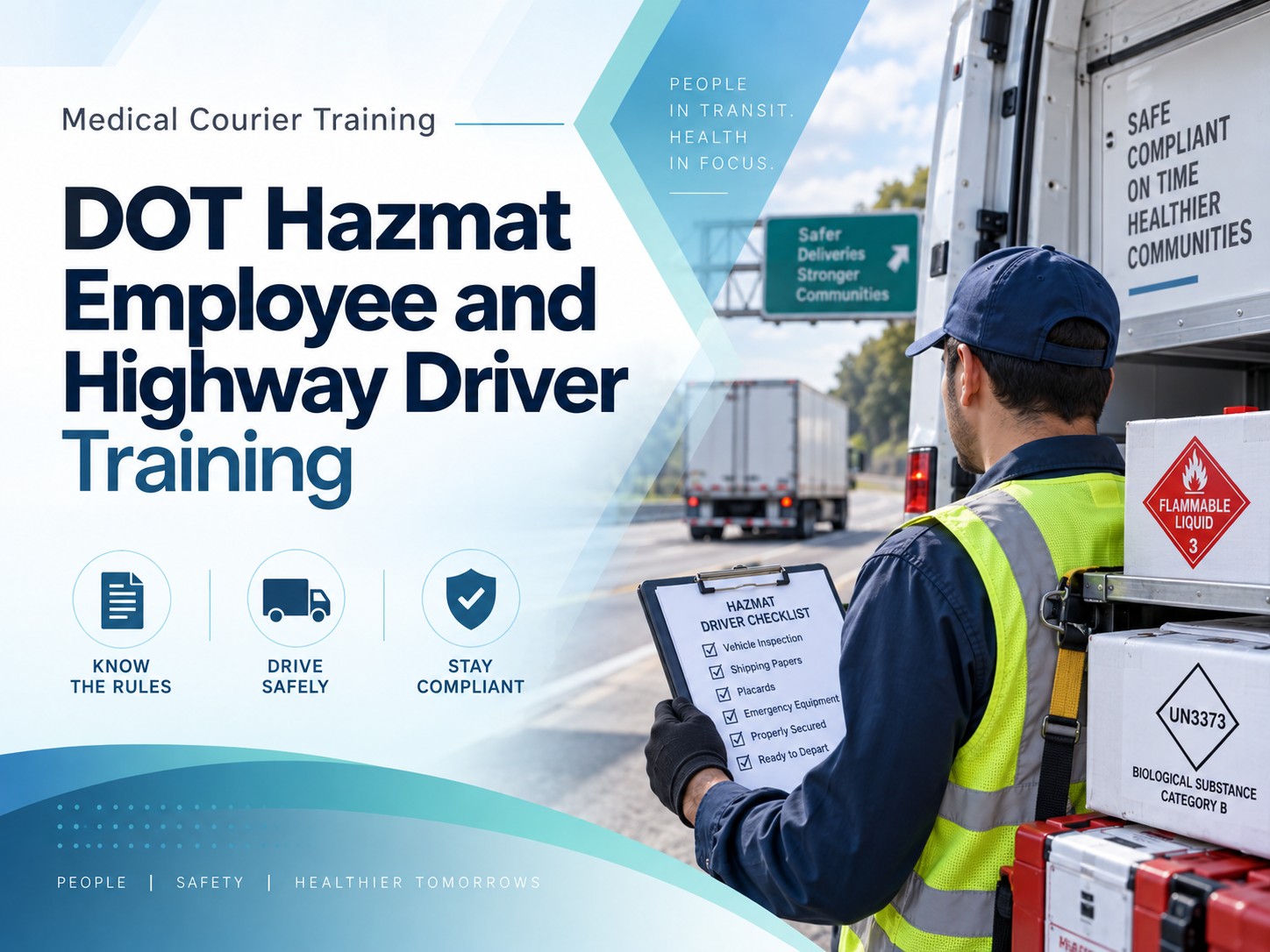
This online training course focuses on the core highway transportation duties of medical couriers who receive sealed hazardous materials packages, inspect the outside of packages, load and secure shipments, maintain required documents, transport packages by public highway, and deliver them to authorized recipients.
The course addresses the core DOT hazmat employee training areas found in 49 CFR 172.700 through 172.704, along with applicable highway transportation duties under 49 CFR Part 177. It is designed around the actual responsibilities and limits of a medical courier rather than the broader duties of a hazardous materials shipper or package preparer.
Certified Medical Courier Professional (CMCP) Course.
12 Online Courses for Medical Courier
.
About This Course
Training Format: 100% online
Learning Method: Self-paced
Course Duration: 40 Minutes
Course Cost: $25
Job Role: Medical courier driver or handler
Regulatory Focus: 49 CFR 172.700–172.704 and applicable 49 CFR Part 177 highway duties
Final Exam: 10 question online final assessment
Passing Grade: 80%
Certificate: Downloadable PDF course completion certificate
Recurrent Training: At least once every two years
After completing the online training and final assessment, the learner can download a PDF course completion certificate.
The certificate documents completion of this course and can support the employer’s DOT training records. It does not replace company-specific or material-specific training, practical verification, or the hazmat employer’s responsibility to certify that the employee has been properly trained and tested for assigned job duties
Why DOT Hazmat Training Matters for Medical Couriers
Transportation creates risks that may not exist while a package is sitting in a controlled facility.
A package can be damaged when it is dropped, crushed, punctured, exposed to heat, placed in the wrong position, mixed with incompatible cargo, or left unsecured during braking or turning. Missing or inaccessible shipping papers can also delay the response to a crash, fire, spill, or leak.
Security is another concern. Hazardous materials packages may be stolen, diverted, tampered with, or delivered to an unauthorized person.
Medical courier DOT training helps drivers recognize warning signs, protect packages and documents, make consistent decisions, and understand when they must stop and request help.
Who Should Take This Course?
This course is intended for people whose work involves the highway transportation of sealed hazardous materials packages, including:
- Medical courier drivers
- Independent medical couriers
- Medical courier owner-operators
- Medical delivery contractors
- Employees who load or unload hazardous materials packages
- Employees who handle sealed hazardous materials packages
- Drivers using cars, vans, or light delivery vehicles
- Dispatchers who direct hazardous materials transportation work
- Supervisors responsible for medical courier transportation safety
- Temporary or part-time medical courier employees
- Healthcare logistics employees
- Laboratory delivery personnel
- Pharmacy and pharmaceutical delivery personnel
- Healthcare distribution drivers
The hazmat employer must review each person’s actual job functions and determine what training is required. The employer is also responsible for testing, employee certification, recurrent training, and training records.
Learning Objectives
After completing this course, the learner should be able to:
- Explain the medical courier’s role in hazardous materials transportation.
- Identify the limits of the courier’s assigned duties.
- Recognize common DOT marks, labels, placards, identification numbers, and transportation documents.
- Distinguish DOT transportation communication from OSHA GHS workplace communication.
- Inspect the outside of a package without opening or altering it.
- Identify package damage, leakage, tampering, and other unsafe conditions.
- Decide whether a package should be accepted, held, or refused.
- Recognize the purpose and basic content of DOT shipping papers.
- Keep required shipping papers accessible during highway transportation.
- Prepare a clean and safe vehicle cargo area.
- Load and secure packages to prevent sliding, tipping, falling, crushing, or puncture.
- Maintain package custody and protect route and delivery information.
- Follow safe highway driving procedures while transporting hazardous materials.
- Respond correctly to a damaged package, leak, crash, fire, or vehicle breakdown.
- Recognize theft, diversion, tampering, and other security concerns.
- Report incidents and suspicious activity through the proper channels.
- Explain the difference between course completion and employer certification.
- Identify the training records the employer must maintain.
These objectives reflect the course’s role-based focus on package recognition, document awareness, securement, driver safety, emergency response, security awareness, testing, and records.
What the Course Covers
The course addresses the following core areas:
- DOT hazardous materials training framework
- Medical courier job roles and role limits
- Hazmat employer and employee responsibilities
- General awareness and familiarization
- Function-specific medical courier duties
- Safety training
- Security awareness training
- Highway driver training
- DOT marks, labels, placards, and identification numbers
- Package recognition and exterior inspection
- Pickup and package acceptance decisions
- Shipping paper awareness
- Emergency response information
- Loading, unloading, and securement
- Highway transportation and delivery
- Incident response and reporting
- Transportation security
- Testing, practical verification, and training records
The course focuses on transportation functions rather than shipper preparation.
What This Course Does Not Cover
This is a core highway transportation course. It is not a complete material-specific training course for every hazardous material a medical courier may encounter.
The following subjects are intentionally outside the scope of this course:
- Division 6.2 infectious substances
- Biological Substance, Category B
- UN3373 packaging and transportation requirements
- Dry ice, UN1845
- Class 7 radioactive materials
- Detailed radiopharmaceutical transportation requirements
- Air dangerous goods shipping
- OSHA GHS chemical label training
- Safety Data Sheet format and use
- Material classification
- DOT packaging selection
- Hazardous materials package preparation
- Application of DOT hazard labels
- Shipper certifications
- Changing proper shipping descriptions
- Repackaging damaged shipments
These subjects require separate training when they apply to the courier’s assigned duties. We have separate course for many of the above courses that apply to medical courier job role.
Course Completion and Employer Certification
Completion of this course shows that the learner completed the online training and assessment.
However, a course completion certificate does not automatically authorize the learner to perform every hazardous materials function.
The hazmat employer remains responsible for:
- Identifying hazmat employees
- Defining each employee’s assigned functions
- Confirming that training matches those functions
- Providing material-specific training when needed
- Providing company-specific procedures
- Testing employees
- Certifying that employees were trained and tested
- Conducting practical verification when appropriate
- Maintaining training records
- Providing recurrent training
- Providing in-depth security training when a required security plan applies
PHMSA allows online, computer-based, and virtual training, but the hazmat employer must ensure that all applicable training components and function-specific duties are covered. The employer remains responsible for compliance.
Required Employer-Specific Training
The employer should supplement this course with instruction covering its actual operations, including:
- Authorized hazardous materials
- Approved vehicles
- Approved securement equipment
- Company pickup checklist
- Package acceptance and rejection procedures
- Shipping paper procedures
- Emergency contacts
- Incident reporting forms
- Lost or stolen shipment procedures
- Route restrictions
- Client and facility requirements
- Special permit requirements when applicable
- Company security procedures
- Transportation security plan duties when applicable
- Company-specific practical evaluation
Generic course training must be connected to the employee’s real vehicle, route, materials, equipment, and company procedures.
Initial and Recurrent Training
A new hazmat employee or an employee assigned a new hazmat function must complete applicable training within 90 days of employment or the job-function change.
Before completing that training, the employee may perform the function only under the direct supervision of a properly trained and knowledgeable hazmat employee.
Recurrent hazmat training is required at least once every three years. Training should also be updated sooner when regulations, materials, procedures, equipment, or assigned job functions change.
DOT Training Record Requirements
The hazmat employer must create and retain a current training record for each hazmat employee.
The record must include:
- Hazmat employee’s name
- Date of the employee’s most recent training
- Description, copy, or location of the training materials
- Name and address of the person providing the training
- Certification that the employee was trained and tested
Records must include the current training and the preceding three years. They must be retained for as long as the employee works for the employer as a hazmat employee and for 90 days after that employment ends.
Why Choose This Medical Courier DOT Hazmat Course?
Built Around the Medical Courier Job Role
The course focuses on what couriers do during pickup, loading, highway transportation, delivery, and incident response.
Clear Role Boundaries
Learners are taught what they may do, what they should not do, and when they must stop and request help.
Highway Transportation Focus
The training addresses vehicle readiness, shipping paper placement, securement, driving conditions, routes, breakdowns, delivery, and applicable Part 177 duties.
Realistic Courier Scenarios
The course includes decisions involving missing information, damaged packages, leaking packages, failed deliveries, document placement, suspicious activity, crashes, and fires.
Avoids Unnecessary Duplication
Detailed UN3373, dry ice, Class 7, air shipping, and GHS content remain in their own courses.
Supports Employer Documentation
The course includes testing, a practical verification checklist, employer add-on guidance, and training record information.
Frequently Asked Questions
Prepare Medical Couriers for Safer Hazmat Transportation
Medical couriers need more than general driving knowledge when transporting hazardous materials.
They must recognize transportation communication, inspect packages, protect shipping papers, secure loads, maintain custody, respond correctly to emergencies, recognize security concerns, and stay within their assigned duties.
Enroll in Medical Courier DOT Hazardous Materials Employee Training Under 49 CFR 172.700–172.704 to build role-based knowledge for safer highway transportation.
Important Compliance Notice
This course provides core DOT hazardous materials employee training content for the medical courier role described on this page. It is not a shipper certification course and does not independently authorize a learner to perform every hazardous materials function.
The hazmat employer must evaluate the employee’s actual duties, provide any additional function-specific, material-specific, company-specific, modal, security-plan, state, route, facility, client, or special-permit training, test the employee, certify completion, and maintain the required records.
Employers should review the current eCFR and applicable company procedures before assigning hazardous materials duties.
Medical Courier DOT Hazardous Material Employee Training is rated 4.5 out of 5 by 4586 users.