
Ground Transportation Training for Medical Courier Drivers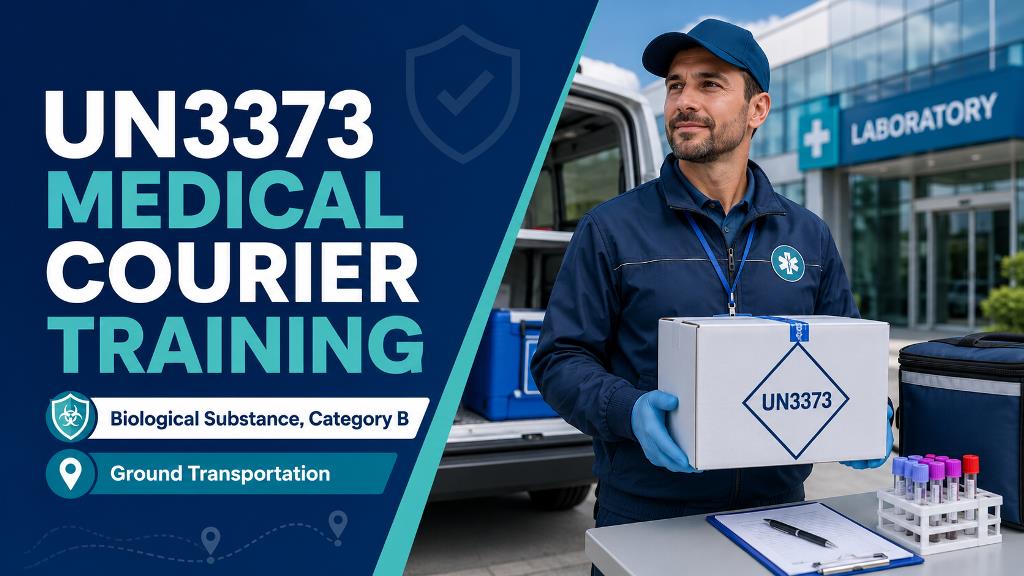
A sealed specimen package may look simple from the outside. Inside, it may contain blood, urine, tissue, swabs, cultures, body fluids, or another human or animal specimen being transported for diagnosis, testing, treatment, or investigation.
When a trained shipper classifies the material as Biological substance, Category B, the completed package must meet the applicable requirements for UN3373.
This course teaches medical courier drivers how to recognize prepared UN3373 packages, inspect them without opening them, secure them inside a vehicle, protect temperature conditions, maintain chain of custody, complete an authorized delivery, and report damaged, leaking, missing, or questionable shipments.
The course focuses on prepared UN3373 packages transported by domestic ground.
Recognize. Inspect. Secure. Deliver. Report.
N3373 medical courier training prepares drivers to transport packages identified as:
UN3373, Biological substance, Category B
The course begins after a trained shipper or qualified professional has classified the material, selected the packaging, closed the package, applied the required marks, and provided the necessary shipment information.
Medical courier responsibilities include:
- Confirming the assigned pickup
- Inspecting the exterior without opening the package
- Recognizing the UN3373 mark
- Confirming the proper shipping name
- Checking for the knowledgeable-person contact
- Inspecting the outer package for damage or wetness
- Confirming the destination and securement plan
- Securing the package inside the vehicle
- Protecting temperature conditions
- Maintaining chain of custody
- Completing an authorized delivery
- Reporting delays, damage, leakage, missing information, or security concerns
This course does not authorize the courier to classify specimens, open packages, repair packaging, replace containers, apply or change marks, prepare air shipments, or perform spill cleanup.
What Is Biological Substance, Category B?
Biological substance, Category B is an infectious substance that does not meet the Category A severe-consequence standard.
The proper shipping name is:
Biological substance, Category B
The identification number is:
UN3373
The material is associated with Division 6.2 infectious substances and must meet the applicable conditions in 49 CFR 173.199.
Category B shipments may contain certain human or animal specimens collected for research, diagnosis, treatment, or investigation.
A trained shipper or qualified professional determines the classification. A medical courier should not classify a specimen based on its appearance, package size, pickup location, or verbal reassurance.
What Does UN3373 Mean?
UN3373 is the transportation identification number for Biological substance, Category B.
The shipment is associated with Division 6.2 infectious substances and must meet the applicable package and communication requirements in 49 CFR 173.199.
The UN3373 symbol:
- Uses a square-on-point design
- Appears on the rigid outer packaging
- Must remain visible and durable
- Is placed with the proper shipping name
- Is a package mark, not a hazard label
- Is different from the biohazard symbol
The mark identifies the transportation category. It does not identify the patient, test, organism, or exact contents.
Why Medical Couriers Need UN3373 Training
Medical couriers help move specimens from collection locations to laboratories and other authorized receiving facilities.
A damaged package, missing mark, unsecured load, temperature problem, incorrect handoff, or delayed response can affect:
- Courier safety
- Public safety
- Specimen integrity
- Laboratory testing
- Patient care
- Transportation compliance
- Chain of custody
The course teaches drivers how to recognize a prepared UN3373 shipment, inspect its external condition, protect it during transportation, and stop when a problem is outside their authority.
What You Will Learn
After completing this training, learners should be able to:
- Explain Division 6.2 and Category B
- Explain what UN3373 identifies
- Distinguish Category B from Category A
- Recognize the UN3373 mark
- Recognize the proper shipping name
- Identify common marking problems
- Explain the purpose of triple packaging
- Identify the three packaging layers
- Understand liquid and solid specimen controls
- Complete a no-open acceptance inspection
- Recognize leakage, wetness, staining, and package damage
- Check for knowledgeable-person contact information
- Inspect packages inside an overpack
- Secure packages inside a vehicle
- Protect packages from crushing and puncture
- Maintain temperature conditions when assigned
- Maintain chain of custody
- Complete an authorized delivery
- Respond to delays, crashes, fires, and damaged packages
- Report and escalate incidents correctly
- Recognize when separate dry ice or air-transport training is required
- Stay within the courier’s assigned role
Who Should Take This Course?
This course is designed for medical courier personnel who accept, load, transport, transfer, or deliver prepared UN3373 packages by domestic ground, including:
- Medical courier drivers
- Laboratory courier drivers
- Specimen transport drivers
- Healthcare delivery drivers
- Independent medical couriers
- Contract medical couriers
- Couriers responsible for prepared Category B packages
Employees who classify specimens, prepare packages, apply marks, repair packaging, perform spill cleanup, or offer packages for air, vessel, or rail transportation require additional function-specific training.
How This Course Is Different
Designed for Ground Medical Courier Duties
The course focuses on accepting, inspecting, loading, securing, transporting, transferring, and delivering prepared UN3373 packages.
Separates Shipper and Courier Responsibilities
The shipper classifies and prepares the package. The courier performs an external inspection and protects the completed shipment during transportation.
Uses No-Open Acceptance Procedures
Couriers learn to check the package exterior, marks, contact information, overpack configuration, temperature instructions, and destination without opening the shipment.
Includes Courier Decision Scenarios
Learners review damaged packages, missing contact information, padded envelopes, temperature alerts, wet packages, UN3291 shipments, and requests to add missing marks.
Maintains Clear Course Boundaries
The course does not cover Category A preparation, UN3291 transportation, dry ice requirements, air offering, package preparation, classification, or spill cleanup.
What This Course Does Not Cover
This ground-transport course does not authorize or replace training for:
- Category A infectious substances
- UN2814 or UN2900
- Category A medical waste, UN3549
- Regulated medical waste, UN3291
- Dry ice, UN1845
- Air, vessel, or rail shipment preparation
- Specimen classification
- Package preparation or repair
- Applying or changing package marks
- Spill cleanup
- Employer-specific emergency and exposure procedures
- Broader DOT hazmat functions outside the course scope
Employers must evaluate each employee’s actual functions and provide all applicable supplementary training.
Frequently Asked Questions
What is UN3373?
UN3373 is the United Nations identification number assigned to Biological substance, Category B, for transportation.
What is a Biological substance, Category B?
It is an infectious substance that does not meet the Category A severe-consequence criteria. The shipper determines the classification based on available information and applicable regulations.
Who decides whether a specimen is UN3373?
The shipper or another properly trained and authorized person classifies the specimen. The courier should not make or change the classification.
What is triple packaging?
Triple packaging uses a primary receptacle, secondary packaging, and outer packaging to protect a specimen during transportation.
Should a courier open the package to inspect the inner container?
No. A courier normally inspects the exterior of the completed package. Opening it may create exposure and can compromise the packaging system.
Is UN3373 the same as Category A?
No. Category A materials are capable of causing permanent disability or life-threatening or fatal disease in otherwise healthy humans or animals after exposure. Category A shipments have different requirements.
Is UN3373 the same as regulated medical waste?
No. UN3373 generally identifies Category B specimens transported for testing or investigation. Regulated medical waste may be transported under UN3291 when applicable.
Is dry ice included in this course?
The course briefly explains how dry ice may be used with specimens. Full dry-ice transportation requirements are covered in the separate Medical Courier Dry Ice Transportation Training for UN1845.
Important Training Notice
This course provides function-focused training for medical courier personnel transporting prepared Biological substance, Category B, UN3373 packages by domestic ground.
It does not authorize Category A transportation, UN3291 regulated medical waste transportation, specimen classification, package preparation, package repair, spill cleanup, or offering packages for air, vessel, or rail transportation.
PHMSA does not approve or certify private training courses. Employers must determine the employee’s assigned functions, provide applicable training and testing, supply employer-specific procedures, complete the required function signoff, and maintain appropriate training records.
Broader DOT hazmat employee training may apply based on the employee’s actual duties.
UN3373 Medical Courier Training is rated 4.6 out of 5 by 8574 users.