Help Protect Specimen Integrity From Collection Through Delivery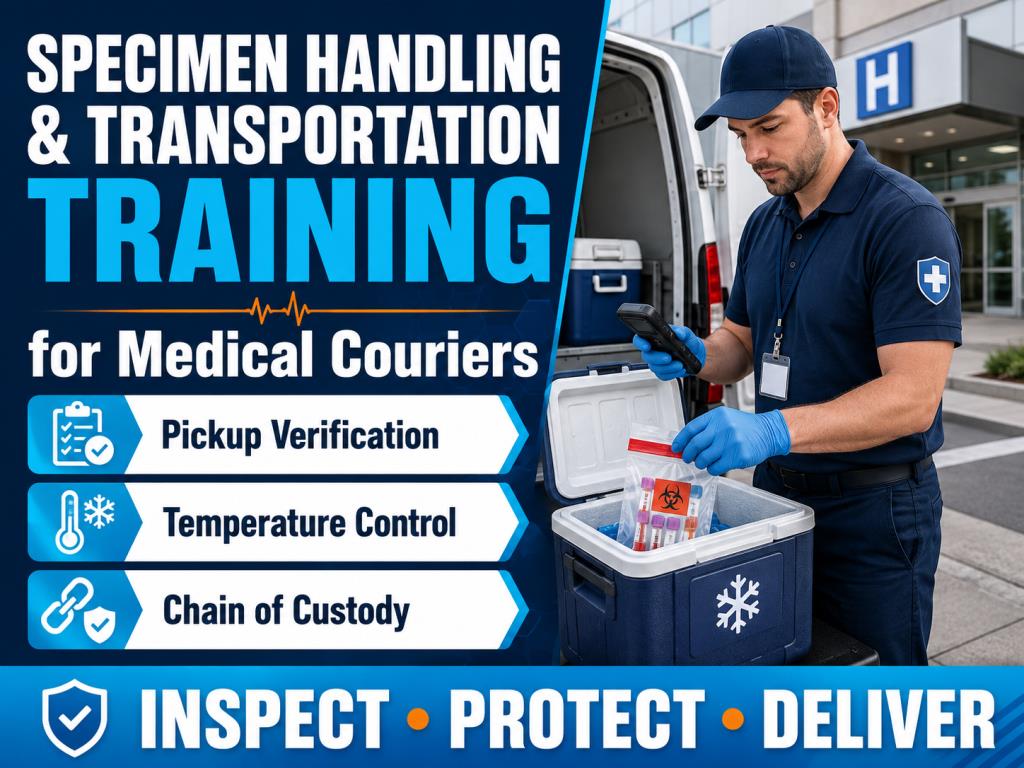
Medical couriers play an important role in transporting laboratory specimens and medical samples safely and efficiently. These specimens may support diagnostic testing, treatment decisions, disease investigation, and other healthcare services.
Improper handling, temperature fluctuations, transportation delays, damaged packaging, or incomplete custody documentation may affect specimen quality and interfere with testing.
The online Medical Courier Specimen Collection and Transportation Best Practices Course helps couriers and healthcare logistics personnel understand the practices used to protect specimens during storage, handling, transportation, and delivery.
The course addresses specimen integrity, collection awareness, transport systems, temperature control, packaging and labeling awareness, chain of custody, PPE, hygiene, emergency response, and secure delivery.
What Is Medical Courier Specimen Handling Training?
Medical courier specimen handling training explains how couriers and healthcare logistics personnel can help protect specimen quality throughout the transportation process.
The course introduces the connection between specimen collection, storage, packaging, transportation, and delivery. Learners examine how time, temperature, handling, hygiene, security, and documentation can affect specimen integrity.
The training covers:
- The medical courier’s role
- Specimen collection awareness
- Specimen integrity
- Specimen storage
- Transportation systems
- Temperature-control practices
- Packaging and labeling awareness
- Chain-of-custody procedures
- Secure transportation and delivery
- Personal protective equipment
- Hygiene and infection-control practices
- Emergency-response awareness
- Actions to take and avoid
- Practical courier checklists and scenarios
The course does not provide clinical phlebotomy training or authorize couriers to collect blood or other specimens directly from patients.
Why Specimen Transportation Matters
The condition of a specimen can affect the reliability of laboratory testing. Problems during collection, storage, or transportation may lead to:
- Delayed testing
- Specimen rejection
- Specimen recollection
- Compromised specimen integrity
- Inaccurate or unreliable results
- Interrupted patient care
- Exposure to infectious materials
- Incomplete chain-of-custody records
- Loss of healthcare client confidence
Medical couriers help connect specimen collection locations with laboratories and receiving facilities. Their handling and transportation practices can directly affect specimen quality and timely delivery.
Who Should Take This Course?
This course is designed for people involved in specimen handling, logistics, transportation, and delivery.
Appropriate learners may include:
- Medical courier drivers
- Healthcare delivery drivers
- Laboratory couriers
- Diagnostic specimen couriers
- Hospital and clinic personnel
- Laboratory and diagnostic staff
- Healthcare employees involved in specimen logistics
- Employees involved in specimen packaging
- Third-party healthcare logistics providers
- Route supervisors
- Dispatch personnel
- Medical courier contractors
- Courier company owners and managers
- New medical couriers
- Experienced couriers needing refresher training
Learning Objectives
After completing this course, learners should be able to:
- Explain the courier’s role in protecting specimen integrity
- Recognize factors that may affect specimen quality
- Understand how collection practices can affect transportation
- Describe basic specimen storage principles
- Recognize suitable specimen transport systems
- Explain the importance of temperature control
- Understand packaging and labeling awareness
- Explain the purpose of chain-of-custody procedures
- Identify appropriate PPE and hygiene practices
- Recognize conditions that may compromise a specimen
- Describe appropriate actions during an emergency
- Recognize actions that should be avoided
- Apply course principles to practical courier scenarios
- Support safe, secure, and timely specimen delivery
How This Course Supports Medical Courier Work
Protect Specimen Integrity
Learners understand how storage, temperature, handling, transportation, and delivery can affect specimen quality.
Reinforce Courier Responsibilities
The course explains the courier’s role in maintaining safe, secure, and timely transportation.
Improve Chain-of-Custody Awareness
Learners review the importance of documenting and protecting custody throughout the transportation process.
Strengthen Safety Awareness
The course addresses PPE, hygiene, infection control, and emergency-response practices.
Support Consistent Procedures
Organizations can use the training to establish a shared foundation for drivers, contractors, dispatchers, and supervisors.
Provide Flexible Online Learning
The course is online and self-paced, allowing learners to complete it around work and delivery schedules.
How This Course Is Different
This course focuses on protecting specimen integrity during pickup, custody, transportation, and delivery. It works alongside your other medical courier courses without repeating their detailed content.
| Course | Main focus |
|---|---|
| Specimen Handling and Transportation Best Practices | Pickup checks, specimen integrity, temperature, custody, and delivery |
| OSHA Bloodborne Pathogens Training | Occupational exposure to blood and OPIM |
| UN3373 Training | DOT requirements for Biological Substance, Category B |
| Dry Ice UN1845 Training | Safe and compliant dry ice transportation |
| HIPAA for Medical Courier Operations | Privacy and security during courier activities |
| DOT Hazmat Employee Training | General awareness, security awareness, safety, and function-specific responsibilities |
| Infection Control Training | Broader infection prevention practices |
| Regulated Medical Waste and Sharps Training | Handling and transportation of UN3291 waste and sharps |
Frequently Asked Questions
Build Better Specimen Transportation Practices
Medical couriers help protect the connection between specimen collection and laboratory testing.
This online training provides a practical foundation in:
- The medical courier’s role
- Specimen integrity
- Collection awareness
- Storage and transport systems
- Temperature control
- Packaging and labeling awareness
- Chain of custody
- PPE
- Hygiene practices
- Secure delivery
- Emergency-response awareness
- Practical courier scenarios
Online and self-paced
Approximately one hour
44 audio-supported slides
60 days of access
English and Spanish options
Certificate of completion
$25 per learner
Important Safety and Compliance Notice
This course provides general specimen collection awareness, handling, storage, and transportation education. It does not replace an employer’s workplace procedures, client instructions, exposure-control requirements, packaging protocols, or required function-specific training.
The course does not provide clinical phlebotomy training. It also does not replace OSHA Bloodborne Pathogens training, HIPAA training, DOT hazmat employee training, UN3373 training, dry ice training, or other specialized instruction that may apply.
Employers are responsible for evaluating each employee’s duties, the materials transported, transportation conditions, and applicable workplace and client requirements.